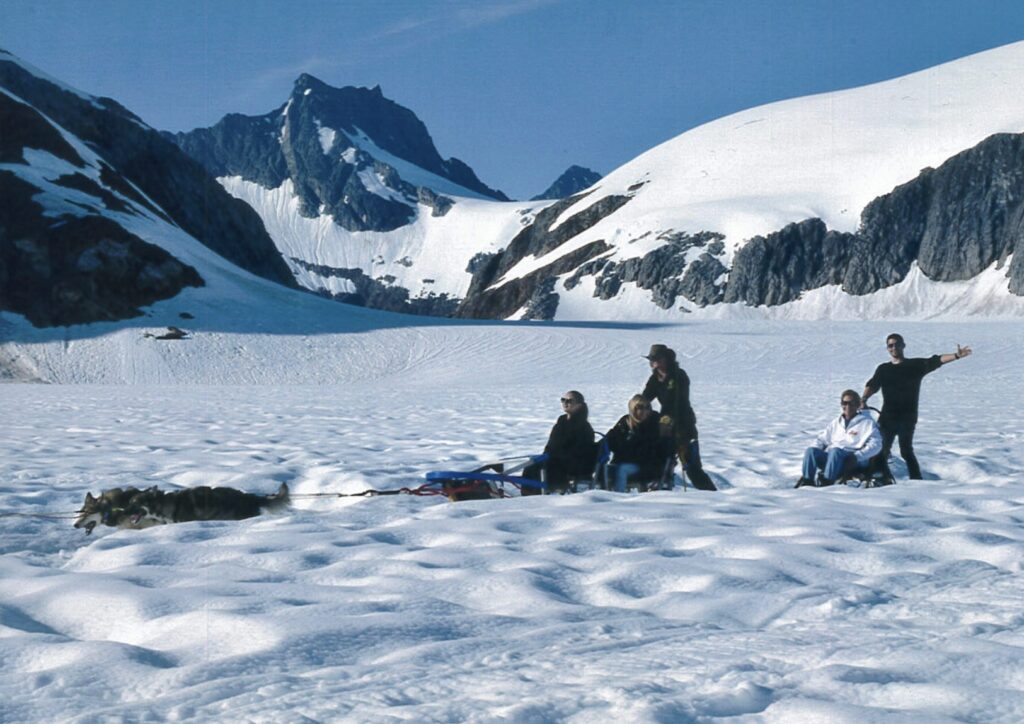
Imagine stepping out of a helicopter onto the icy blue ground of a glacier, greeted by the excited barks of hundreds of beautiful husky puppies ready to interact with you. Pretty magical, right? We recently had the once-in-a-lifetime opportunity to go dog sledding in Alaska, and it was a truly surreal experience. Especially as dog lovers! If you’re ready to glide across the snow pulled by the lovable sled dogs of Alaska, look no further. We have all of the details you need for the ultimate dog sledding experience.
The History of Dog Sledding in Alaska
Dog sledding dates back to ancient times. We were told on our excursion that dogs have been pulling sleds since at least 1000 BC, which is crazy to think about! And crazier still, dog sledding hasn’t changed that much since that time. Sleds are more advanced now, but the concept and the human-animal partnership remain largely unchanged. We learned that while there’s some training involved, it’s a lot less than you’d think. The dogs intuitively know what to do and can teach other dogs how to lead just by their example. The most common Alaska sled dog breeds are Alaskan Huskies, Siberian Huskies, and Alaskan Malamutes.
Prior to colonization, Alaska Native groups like the Inuit used sled dogs for hunting, transportation, and hauling supplies. Then, during the Gold Rush, an influx of settlers came to Alaska. Dog sledding grew from there to help transport miners, mail carriers, doctors, and more. It was the easiest way to transport these people and their supplies across vast, snow-covered regions.
In 1973, the Iditarod Trail Sled Dog Race was created to commemorate this history and the 1925 Serum Run to Nome that saved countless lives (and inspired the movie Balto!). Now, many mushers and their dogs will participate in this race during the winter season. And dogs are kept in shape during the summer with dog sledding excursions for tourists. The dogs keep up their training, and the tourists get to partake in a piece of Alaskan history.
What the Experience is Really Like
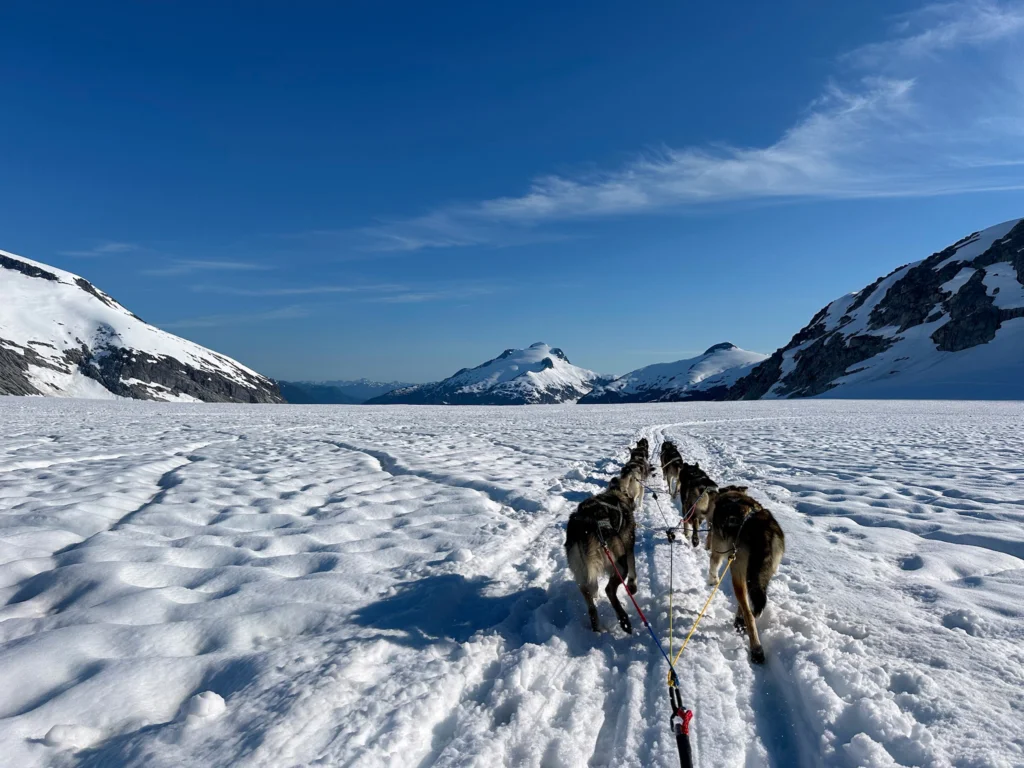
There are a couple of different types of dog sledding experiences in Alaska. You can opt for a helicopter ride, where you’ll get to ride a sled on a glacier. We did the Juneau dog sledding & glacier helicopter tour, and it was the perfect mix of activities.
You could also visit a musher camp. Musher camps are at a lower elevation and don’t require a helicopter to get there. But instead of sledding, you ride a wheeled cart pulled by the dogs. These camps keep the dogs in shape year-round, without needing to be in the snow. You get far more time with the sled dogs at a musher camp than you do with the helicopter experience. With the helicopter, you need time for transportation to the ‘copter, time for the training debrief, flight time, time on the glacier, and then the return helicopter flight and transport. There’s less transportation time needed to and from the musher camp, giving you more time to play with the dogs.
Unfortunately, on our excursion, we didn’t get to touch the puppies. But that honestly showed us that they put the dogs’ care first. The mushers didn’t want to risk the puppies getting sick since they had yet to get their shots. But at the musher camps, the dogs all typically have their vaccinations, so you’re bound to get some puppy cuddles!
One thing we were a bit jarred by was the dog poo! It makes sense in hindsight, but we hadn’t considered how much the dogs would be going to the bathroom while driving the sled! It’s hard to miss it against the white snow! The ride was also a bit bumpier than expected, but that may be a result of sitting in the very front.
Regardless of whether you go dog sledding on a glacier or visit a musher camp, it is a truly educational experience. You’ll get behind-the-scenes insight into how these dogs are trained, the history of dog sledding, and the life of a musher. We loved asking our musher, Jasper, questions, and we even learned that while bears aren’t so much of an issue for them, moose are! We got to hear some thrilling stories about moose encounters over the years.
Dog Sledding in Juneau or Skagway
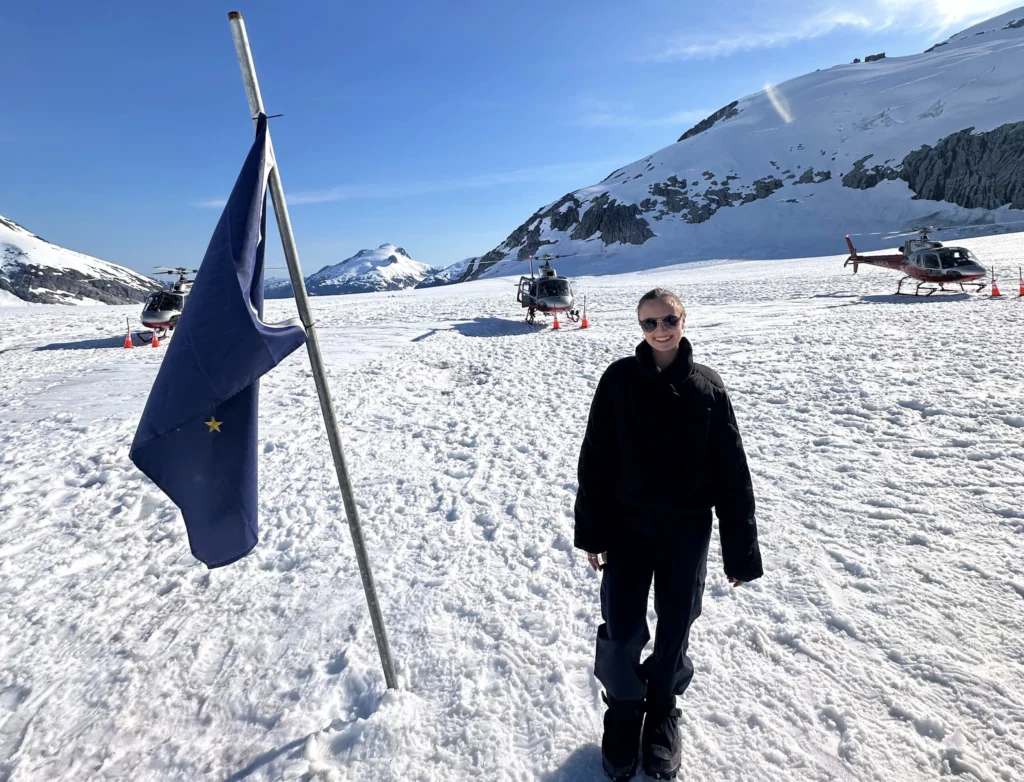
Glacier dog sledding is available in both Juneau and Skagway. These are common cruise ports, so you’ll likely hit one, if not both, spots on your cruise. Dog sledding is the ultimate bucket-list experience. It feels incredibly authentic, especially since the mushers live right there on the glacier. It is more expensive, which is something to consider if your budget is a bit tighter. In Juneau, you’ll likely be dog sledding on the Mendenhall Glacier. In Skagway, you’ll be on the Denver or Chilkat Glaciers. Both ports also offer musher camp experiences.
On our cruise, Juneau was the only port of call where we were able to take a helicopter ride onto a glacier for dog sledding. And we couldn’t possibly turn it down! We loved that it felt like a two-in-one activity. We got to see Alaska from above and got to go sledding. While we could have booked a Skagway glacier experience with another provider separate from our cruise, we liked the convenience of booking it all through Royal Caribbean.
So, which one should you choose? Juneau vs. Skagway? We think the best dog sledding in Alaska is on the Mendenhall Glacier in Juneau. Even if our cruise had offered identical experiences at both ports, we would’ve opted for dog sledding in Juneau. The Mendenhall Glacier simply can’t be beat. The glaciers in Skagway are more remote and not quite as famous or as stunning as the Mendenhall Glacier. BUT if you’d prefer to visit a musher camp instead of a glacier, Skagway has easier access to the musher camps than Juneau.
Cost of Dog Sledding in Alaska
While dog sledding in Alaska is a truly bucket-list, unforgettable thing to do, it’s also one of the most expensive. Here’s what to expect and how to save some money along the way.
We spent about $800 per person to go glacier dog sledding in Juneau. This included ground transportation, a round-trip helicopter flight, landing on a glacier, a sled ride on the snow, and time to meet the dogs. We could have saved a little bit of money by not booking with our cruise line and instead booking with a third party. But the convenience of booking through the cruise made it worth it for us. Pro Tip: If you do decide to book an excursion through your cruise line, book early! Cruise lines often offer deals on their excursions, and the sooner you can book with a deal, the better. The deals decrease as you get closer to your travel date.
Dog sledding at musher camps costs around $300 per person. This excursion includes the ground transportation, a ride in a wheeled cart pulled by dogs, a kennel tour, and time with the dogs. This is the more budget-conscious option and is great for families.
What to Wear and Bring
- Coat, Scarf, Gloves – It’s chilly dog sledding in Alaska! When the dogs start running, you’ll feel a chill from the wind as the sled picks up. Even though it’s summertime, it’s best to come dressed in layers to stay warm. This is especially true if you’re dog sledding on a glacier!
- Sunscreen & Sunglasses – You might not associate putting on sunscreen with sledding, but glacier glare is a real thing! The mushers we met were all extremely tan or burnt despite living on the glacier. The sunglasses also prevent the glare from affecting your eyes.
- Action Camera – We recommend bringing an action camera that you can strap to yourself. That way, you can be in the moment while also capturing the activity. Check out our favorite action camera bundle here.
- Hand Sanitizer – The sled dogs are so cute, you won’t be able to keep yourself from petting them. But you may want to wash up after!
- Boots – Most tours will provide glacier boots, but having solid shoes on just in case doesn’t hurt!
Why Dog Sledding in Alaska is Worth It

My favorite moment while dog sledding was the first second it started. Our musher giving the command to the dogs to start, the feeling of the sled moving beneath me, and the views all around were simply magnificent. I started laughing when the dogs took off because it all felt so surreal. And when we learned more about the history of sledding, I felt deeply connected because I had now had the same experience as people dating back thousands upon thousands of years. And we felt like we understood the life of the mushers after spending time at their camp. You see where they live and hear about their experiences, and it gives you a much better appreciation for their way of life. Basically, dog sledding in Alaska is worth it because it reminds you how big and beautiful the world is, and it connects you to people throughout time.
Dog Sledding FAQ
Is Dog Sledding Safe for the Dogs?
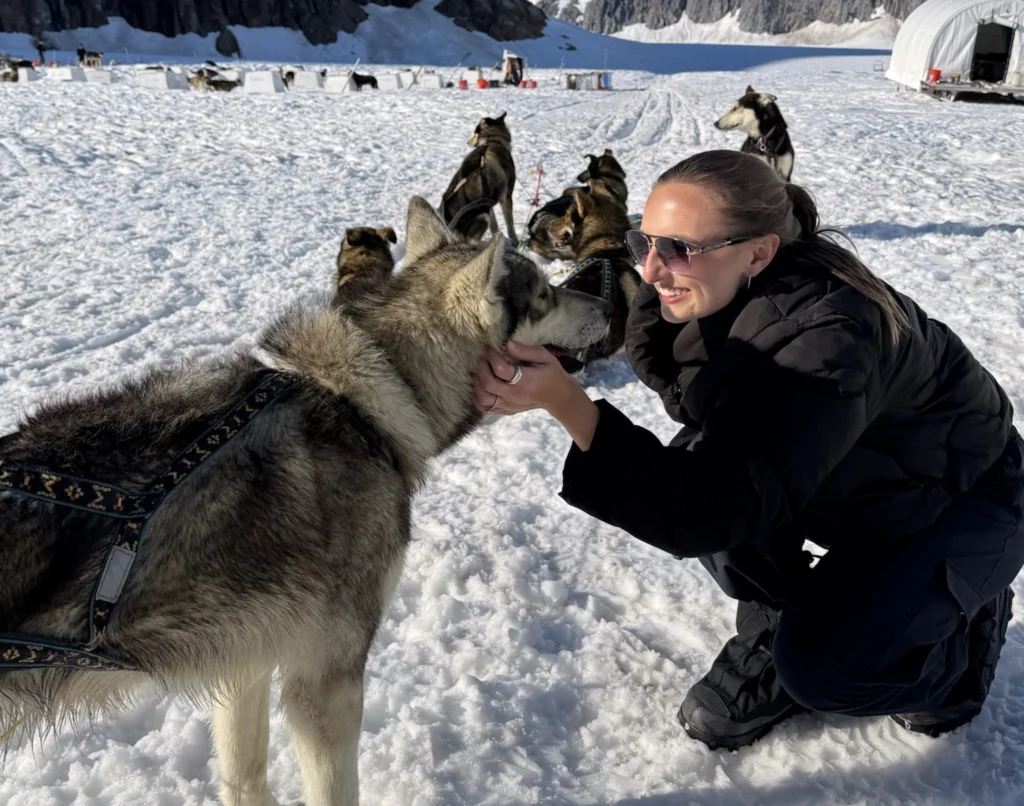
Yes! When done ethically, dog sledding is not only safe for the dogs, but it’s something they love to do. These dogs were born and bred to run, and they are treated with the utmost care by their mushers. That being said, not all operations are run ethically. Here’s what you should know.
At safe and ethical dog sledding operations, the dogs are:
- Given rest and hydration
- Veterinarian-checked before races and tours
- Retired when appropriate
- Treated with respect, attention, and care
It’s pretty typical for mushers to live with 40+ dogs and be able to name each one. The dogs aren’t just part of a team or a way to make money; they are family.
While most sled dog companies in Alaska are ethical, there have been some cases of abuse. Here’s what to watch out for:
- Dirty kennels and starved, lethargic dogs
- An unwillingness to answer questions about dog care, training, retirement, etc.
- Signs of fear or distress in the dogs
Before booking, check reviews and do some research. Look specifically for companies that are involved in the Iditarod or another major Alaska dog sledding race, since they have the highest standards of care.
Can Kids Participate?
Yes, kids can participate in dog sledding! Musher camps typically welcome children of all ages. The wheeled rides are gentler and shorter than traditional sled rides, making them a bit easier for children. Most glacier dog sledding tour operators allow kids aged 2+ to participate. And there are often discounted child rates (usually for ages 2-12). Kids can ride in the sled, but they cannot drive it.
When is the Best Time to Go Dog Sledding in Alaska?
Summertime is best for those traveling on an Alaskan cruise. Dog sledding in Alaska in July provided the perfect weather for us. There’s no snow on the ground at sea level, so it’s best to visit a musher camp or take a helicopter onto a glacier.
Winter is best for the most authentic experience, and you can even sled across frozen lakes. This is more common in Fairbanks and Denali.
April, May, September, and October are the worst times to go dog sledding in Alaska. At these times, it’s too late for winter sledding (most of the snow is melting) or it’s too early for glacier camps to be operating. If you do travel during this time, you should check ahead to see whether any glacier tours or kennel visits are running.
We hope this answered all of your questions about dog sledding in Alaska. Whether you go dog sledding in Skagway, Juneau, Anchorage, Fairbanks, or any other part of Alaska, you’re sure to have a blast. It’s a thrilling and immersive experience that you will take with you for the rest of your life.
If you enjoyed this post, we think you’ll love learning about things to do in Antarctica!