

If you’ve ever dreamed of leaving everything behind to travel from country to country, experiencing all the world has to offer, you’ll be pleased to know that dream is more achievable than you’d think. Traveling the world for a year can feel scary, risky, and intimidating. But it can also be rewarding and life-changing. We break down everything you need to know about how to travel the world for a year, from budget to packing to how to travel for free. And you can score our free, in-depth, trip planning timeline. Let’s dive in!

Why Travel For a Year
Life is short, and there’s a lot to see! There’s never a “right” time to take a year to travel. There may never even be a “good” time. But if traveling and experiencing other cultures is deeply important to you, the time you devote to it will be well worth it.
Still, you can get loads of fulfillment from much shorter trips. So why a year-long one? Often when we travel, we’re taking a few days to a couple of weeks of PTO. It can take almost half of the trip to unwind and get into vacation mode fully. You’re likely not as present during the first part of the trip. And by the end, you’re already dreading all of the stressors of daily life that await you. So basically, your entire trip is spent trying to unwind and then gearing back up for work/life. What a waste! A year-long trip allows you to reset your mind, body, and priorities. You can also move a bit more slowly, better appreciating the places you visit. You’ll have more opportunities for connection with locals, getting off the beaten path, and truly understanding the DNA of a city outside of its major landmarks.
Decide Your Travel Style
We all have an idealistic version of ourselves in our heads. But if you’re going to travel the world for a year, you have to get real with yourself about who you actually are as a traveler. Below is a list of common travel styles. Take some time to assess which category best represents you. You may want to see as many countries as possible during your trip, but genuinely think about what it would take to pull that off. Are you comfortable switching hotels every couple of days? Do you have the budget to visit more expensive countries? Are you someone who burns out quickly? Or you may like the idea of traveling with a partner, only to realize you’re fairly particular and might do better as a solo traveler, calling all the shots. There’s no right or wrong travel style. So pick what resonates most with you.
Travel Styles
Slow Travel – This will appeal the most to retirees, digital nomads, or those with a smaller budget. Slow travel allows you to really immerse yourself in a city or country. You’re maximizing your time in each locale. If you want to become an expert about a few places during your year-long adventure, this style of travel may be the best for you.
Country Hopping – Those taking a gap year of any kind who are planning to go back to school or work when the year is over are most likely to fall into this category. If you want to see as much of the world as possible and don’t know how often you’re going to be able to travel after the year is over, you may want to country-hop and “check off” as much as possible. Many travelers look down on people who “check off” countries. But those who are country-hopping understand that it’s less about a checklist and more about wanting even a sliver of understanding about as many places and cultures as possible. This style of travel is a bit trickier when it comes to budgeting. The longer you can stay put in one place, especially a cheaper one, the more you can stretch your budget.
Budget Travel – I’ll be honest. I am not a budget girly. I am not luxury either, but I really like having my own bathroom, meaning I need to budget for more than hostels. But if you’re someone who is comfortable backpacking and staying in a more communal environment, you can save so much on accommodations. And hostels are such a great way to meet people and make friends, especially for solo travelers.
Mid-Level Travel – This is exactly where we fall. It’s best to choose a spending category that you’re willing to allot more of your budget to, to make your trip more comfortable. For us, that’s accommodations. Like I said, we’re not hostel people, so we’d rather splurge a bit on accommodations, which inevitably raises our budget. For others, it could be experiences. You might be a mid-level traveler because you can’t imagine not taking a tour in every city.
Luxury Travel – On the other end of the pendulum, you have luxury travelers. If you fall into this category, you’re going to need a much higher budget for a year-long trip than what you’re thinking. It’s not easy being boujee on a budget! So you’ll want to save up quite a bit.
Solo Travel – If you’re going solo, every cost is yours alone. Your money won’t go quite as far as it would if you were traveling with a friend or partner. That said, every decision will be yours to make. If you’re someone who likes to be in control, then you’ll love this! If making decisions terrifies you, you might want to consider traveling with a partner.
Couples Travel – Please, please, please, if you plan to do an extended trip with a romantic partner, try out a few shorter trips with them first. You don’t really know someone until you’ve traveled with them. And we don’t mean going on vacation. We mean travel. With missed connections, lost luggage, and han-ger episodes. If you plan to travel as a duo, make sure you’re on the same page about the speed, budget, and locations of the trip.
Group Travel – Similar to couples travel, you’ll want to really know the people in your group before going on a trip with them. You’ll be dealing with a mix of personalities and travel styles. But you don’t always have to do everything together. Traveling in a group can be a major expense saver. This is particularly true when it comes to renting a car, splitting meals, or sharing accommodations.

Free download
Get the Ultimate 1-Year Trip Planning Timeline
Your month‑by‑month guide to planning the perfect year abroad
Budgeting For Your Year-Long Trip
How much does it cost to travel the world for a year? Well, that depends heavily on your travel style. But no matter what your travel style, you’ll want to save up a significant amount of money for a year-long trip. On top of the amounts listed below, we recommend having savings left over for when you return from your trip. This is especially true for anyone without a free place to crash when they return or who is leaving their job to travel. We recommend having approximately three months of living expenses saved up for your return.
When deciding on your budget for the trip itself, you’ll need to account for flights (both long-haul and shorter city or country hops), accommodations, food, activities/sightseeing/tours, insurance, visas, and emergencies. Flights and accommodations are by far the most expensive items to account for. If you’re willing to stay put in one location for longer, your budget will go farther. This is why slow traveling is more budget-friendly than country hopping!
Keep in mind that places like Eastern Europe and Asia will allow your budget to go farther than in places like Western Europe or Oceania. If you want to add a place like Fiji to your trip, you can totally do so! You might just need to spend much of the rest of your trip somewhere a bit more cost-efficient.
How Much to Budget
Budget Traveler – $20k/pp. Since budget traveling often involves staying at hostels, you’re likely to save a lot of money on accommodations. But you’ll still have to be cautious not to blow too much cash on other areas. We recommend eating more street food or getting food from local markets and grocery stores. You can also save some money by walking or utilizing public transportation rather than opting for rideshares. When it comes to sightseeing, you may have to be content just looking at the Eiffel Tower instead of going inside it. This comes out to a budget of about $55/day per person.
Mid-Range Traveler – $35k/pp. We happen to fall under this category ourselves. It’s really easy to overspend if you’re a mid-range traveler. It’s essential to evaluate what part of your budget is most important to you. Are you a major foodie who needs to try the best-reviewed restaurant in every city? Then maybe your food budget is a bit higher, and you spend less on tours or hotels. This comes out to a budget of about $95/day per person.
Luxury Traveler – $65k/pp. This budget still will not stretch far during a year of travel, especially if your trip is truly global. Perhaps you stretch it further by staying longer in Asia. There, you can stay in a nice hotel for significantly less than in other parts of the world. This comes out to a budget of about $178/day per person.
How to Save Money to Travel the World for a Year

Once you have an idea of what your budget will be, plan out how long it would take you to save that amount. Ask yourself whether you’re saving as much as you could be. Do you really need all those streaming services? Can you call to renegotiate a bill? Can you move somewhere cheaper? It’s also helpful to pay yourself first by having your employer deposit a percentage of your paycheck directly into your savings account. I had such a tough time saving money until it automatically routed into my account.
Consider every purchase through the lens of “Could I bring this on the trip?” or “What would I do with this item while on my trip?” If you’re planning to throw out or donate most of your belongings, then acquiring new items doesn’t really make sense! It’s a great incentive for cutting back on shopping habits! You can also reward yourself for every purchase or meal out that you skip. Just add the exact amount you would have spent to your trip fund!
Use apps like Acorns or Chime that round up purchases to the nearest dollar and save the difference for you. You’d be surprised how fast it adds up!
If you’re currently engaged, you could opt to have a year-long wedding celebration or honeymoon. Weddings and honeymoons are expensive these days! You could blink and wind up spending $60k on just one day. As someone who is currently engaged and thinking a lot about the costs of a wedding, I can say firsthand how frivolous it feels to throw tens of thousands of dollars at a one-day celebration. I love weddings and am not knocking anyone for spending any amount of money on celebrating their commitment to their partner. I just personally, like many others, have a hard time wrapping my head around it. What appeals to me is putting the money I’d spend on that one day towards 365 days of traveling the world. This savings idea is definitely not for everyone, but it might get someone else out there thinking!
How to Travel “For Free”
We’re Travel The Unexpected, so we’re all about how to do things in the most unique way possible. Traveling the world for a year is already a unique adventure, but we have insider tips and tricks on how to make it possible for less.
The words “for free” are in quotes because our ideas below help you hack the system and save money. While no round-the-world trip will be truly free, these ideas could save you significant chunks of money.
Travel Hacks, Volunteering, & Jobs Abroad
Repositioning Cruises – When the seasons change, cruise ships will often relocate to another part of the world. Rather than waste money by traversing the seas with no passengers, the ships will offer an often-discounted fare to take this one-way journey. There are fewer ports of call and more sea days than typical cruises, but if you’re looking to make a one-way trip across the world, this is a great, cost-effective option. Especially when you think about all of the money you’d be saving on flights, hotels, and meals!
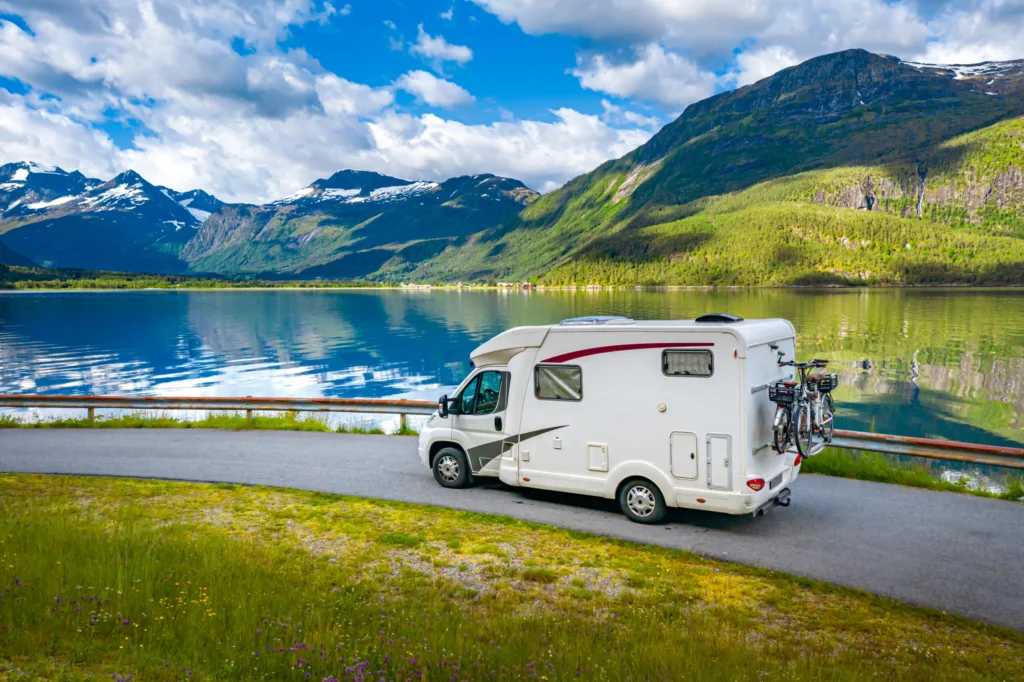
Campervan Relocations – Much like repositioning cruises, rental companies often need to move their vehicles from one location to another. But rather than pay for shipping fees, they often partner with travelers who are willing to drive the campervan to its dropoff point. These companies offer free or extremely discounted rentals. It’s a cost-efficient way for you to get from one point to another (basically for free!) while exploring along the way. This is a huge money saver when it comes to transportation and accommodation, since you can sleep in the van. We recommend Imoova, with relocations worldwide.
Points & Miles – When you sign up for a travel credit card, you earn points and miles towards free or reduced flights and hotel stays. These points are more lucrative than cash back cards because the points are often valued higher than their cash equivalent, depending on how you use them. Some of the hotel cards also come with free night certificates, allowing you to score a free stay without any hassle. Many hotels also offer a points redemption where you can get an extra night free when you book with points. At Hilton, when you book a four-night stay with points, you get a fifth night free. With IHG, it’s even sweeter. You only have to redeem a three-night stay to get the fourth night free. You can see our top credit cards on our travel tips page.
Long Term Stay Discounts – Airbnb often offers a discount for stays of 7+ nights, and even steeper discounts (sometimes up to 60% off!) for 28+ nights. Many boutique hotels and aparthotels also offer long-term rates. Just email the property directly to inquire. Pro Tip: Even if you only plan to stay 5 nights, check the 7-night rate. It’s often cheaper to book the longer stay and check out early.
House & Pet Sitting – Sites like Trusted Housesitters help you connect with people who need someone to watch their house or pet. It’s a great way to get a free stay.
Work Exchange – If you’re willing to part with a few hours of your day or week, you can immerse yourself in a culture by helping a local business and get free lodging. Sites like World Packers or WWOOF help you find work exchange opportunities.
Content Creation & UGC – If you’re an influencer (or are building a following through your trip), you can possibly turn that following into a free stay. But remember not to assume you can get a free stay just for having a social following. Your brand should align with the hotels, and you should explain how you can be helpful to them. If being on camera and posting on your own social channels isn’t your thing, you should consider user-generated content. You can reach out to hotels, activity providers, and tourism boards and offer to make content that they can put on their brand’s social media channels and/or website. Eventually, as you build your portfolio, you can travel the world and get paid to do so!
Planning Your Route

Figuring out what countries to hit in which order is a tall and daunting task! Even if you’re a geography whiz, it can be difficult to figure out the best order while also considering weather, festivals, and holidays. Here are some things to keep in mind as you plan out how to travel the world for a year.
Follow the Seasons – With such limited space in your bags, it seems unnecessary to be carrying a bathing suit and a winter coat. If you plan your travels around when each locale will be warm and experiencing summer, you can pack lighter and spend more time outdoors. You’ll also want to research when monsoon or hurricane seasons will be in regions where they’re prevalent. For example, it’s best to avoid Southeast Asia from June to October and the Caribbean in late summer.
Group Nearby Countries Together – Long-haul flights are expensive! We recommend hitting one region at a time by grouping nearby countries together before moving on to the next region. This way, you can also take advantage of regional trains and budget airlines. Also, look to fly out of major hubs that have more flight options at often cheaper rates.
Plan Around Festivals and Events – We love experiencing a culture and/or city through its celebrations. But major events often sell out, so it’s best to book early and plan some of your trip around them. Here are some of our favorite festivals and events around the world that will make your trip even more memorable.
- Up Helly Aa, Scotland (January)
- Rio Carnival, Brazil (February)
- Holi, India (March)
- Midsummer Festival, Sweden (June)
- The Wife Carrying Contest, Finland (July)
- La Tomatina, Spain (August)
- Día de los Muertos, Mexico (November)
See our list of 42 travel experiences and festivals here.
Leave Room for Spontaneity – One of the best tips we can offer is to have about three weeks to a month not planned out. This way, if you fall in love with a place, you can extend your time there worry-free. While you might feel pressured to map out every second of your trip (it’s scary making the world your home for a year!), over-planning can lead to more stress and burnout. This is also where it’s important to book refundably as often as possible.
Use Tools to Map Your Adventure – Tools like Google My Maps (route planning/mapping), Rome2Rio (planning transportation between cities), and Nomads (finding places in your budget & comfort zone) make it easier to plan out your trip of a lifetime. We also love using Wanderlog to build out itineraries in every city. Their pro version offers an optimization tool that will give you the best route between the sites.
Logistics & Long-Term Travel Tips

What to Pack to Travel the World for a Year
You are not going to want to lug around massive suitcases or even heavy backpacks when you travel the world for a year. Of course, you want to be prepared and have clothes for a variety of climates, be stocked up on medicines for every ailment, and buy souvenirs in every city. But give it a couple of weeks of traveling like that and you’ll be absolutely miserable. We recommend building a capsule wardrobe of versatile clothing that can be layered together in cooler climates and worn bare in warmer weather. Merino wool is an excellent clothing option since it absorbs odors and adapts to your body temperature. The pieces are pricey but a worthwhile investment. I recently wore this merino wool sweater from Amazon on a trip to Alaska, and it was the perfect piece as the weather shifted throughout the day.
Some of our favorite items to pack light but effectively:
- Ethique Beauty Shampoo & Conditioner Bars – No more worrying about packing liquids that will run out within the first month. These solid shampoo and conditioner bars won’t cause any hassle with TSA and can last as long as three bottles.
- Matador Droplet Wet Bag – No one wants wet or dirty clothes comingling with the rest of their items. This tiny bag can be expanded to hold your wet or soiled clothes.
- Matador NanoDry Towel – No long-term traveler has the space for bulky, wet towels. But what do you do for a spontaneous beach day? This towel dries insanely fast and folds down into almost nothing. It’s a perfect add-on that you won’t use every day, but will be glad to have when you need it.
- Sea to Summit Travel Clothesline – Say goodbye to the luxury of in-unit washers and dryers! You may be hand-washing and line-drying soon, and will want this compact clothesline when you have nowhere to lay out your clothes.
- Sink Suds – Perfect for washing your clothes on the go, so you can pack fewer items and clean them in your hotel room.
Visas for Long-Term Travel
If you’re going to travel around the world for a year, you’ll likely be visiting multiple countries, each with its own visa requirements. Some countries don’t require a visa, some allow you to get a visa when you arrive with certain passports, and others require you to apply well in advance. So, how do you keep it all straight?
- Research visa requirements for every country on your route. Even research any long-shot countries you think you might visit. You’re not going to want to be doing this research during your actual trip. Keep an updated spreadsheet of all the visa requirements.
- Apply for longer-stay or multiple-entry visas where possible. This is much easier than having to apply repeatedly if you plan to stay for an extended period of time or plan to return to that country later.
- Don’t overstay your welcome beyond your visa! You’ll be fined, which won’t help your budget!
- If this all feels too overwhelming and you already have enough on your plate with the rest of the RTW (round the world) trip planning, consider hiring a visa service or travel agent who can navigate the visa process for you.
Travel Insurance for Long Trips
You absolutely should not travel the world for a year without insurance. That is just tempting fate! You will be on the go the whole time in foreign places, and it’s not worth the risk of paying thousands of dollars or more in surprise medical fees.
When looking for long-term travel insurance, make sure it includes medical coverage abroad (including hospital stays and emergencies), adventure activities coverage (skydiving, scuba diving, skiing, etc, aren’t covered automatically), trip interruption and delay coverage, and lost or stolen belongings.
We’re partial to SafetyWing, World Nomads, Allianz, and Genki for year-long trips.
E-Sims
Phone carriers often charge $10+ per day for international cell service. This is just not feasible on a long trip! We recommend using an e-SIM, which is a digital SIM card that gives you data on your phone no matter where you go.
Why e-SIMs are necessary for round-the-world travel:
- You can activate your e-SIM immediately upon entering a country. You don’t need to worry about ordering or picking up a physical SIM card. And you can manage all of the settings right from your phone.
- Purchasing one e-SIM grants you access to multiple countries, making it simple to keep track of.
- E-SIMs are much more affordable than using your home phone carrier, especially for long-term travel.
A few of the most popular e-SIM providers include Airalo, Nomad, and GigSky. You can buy plans in advance or top off on the go.
Mail & Banking
You still need a “home base” for important mail while traveling the world. Your mailing address matters more than you think, especially for banking. Make sure that the address on file with your bank, credit cards, and other accounts is the same as your mailing address. Banks use your address to verify your identity, and leaving it blank or switching it up can be a red flag. The last thing you want is frozen accounts while you’re traveling! Before you leave for your trip, choose one stable address (a family member’s or friend’s) and use that for all of your mail and banking.
Planning a round-the-world trip is a lot of work. We hope this post and our free trip planning timeline gave you more clarity on how to travel the world for a year. For more year-long trip planning guides, join our newsletter!
What else would you like to know about planning a round-the-world trip? Let us know in the comments. We’re here to help!